
The Post-2021 Reality
January 2021 feels like ancient history now, but its effects continue to shape financial services. The retail investing surge introduced millions of new participants to financial products—some temporarily, many permanently. Those who stayed have matured into a distinct customer cohort with characteristics that differ significantly from both the 2021 frenzy and the pre-pandemic customer profile.
The numbers tell part of the story. Retail engagement with financial products, after spiking dramatically in 2021, settled at levels roughly 40% higher than pre-pandemic norms. Account openings at financial services firms remain elevated, though without the parabolic growth of that era. Product adoption among retail customers, once limited, has become mainstream.
But the more important changes are qualitative. The customers who survived the 2021 boom and subsequent market volatility are fundamentally different from both their predecessors and their own 2021 selves. Marketing that worked three years ago—or even two years ago—often falls flat today.
Demographic Shifts
Understanding who you’re marketing to requires acknowledging how dramatically the customer population has changed.
Age Distribution Has Compressed
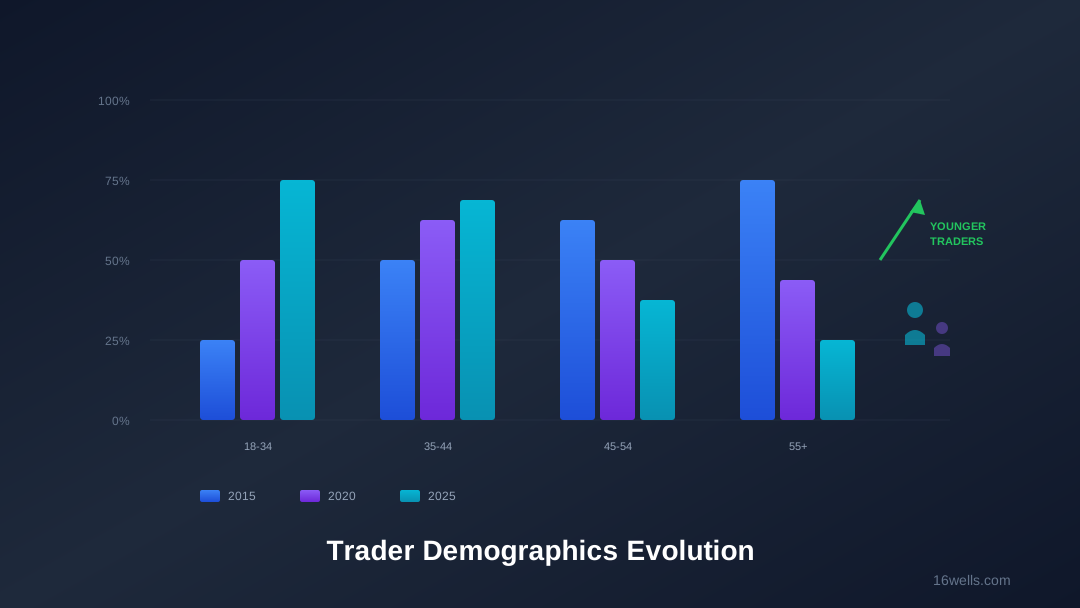
Active engagement with financial products skews dramatically younger than it did a decade ago. The median age of new customers at most platforms is now under 35, compared to mid-40s in 2015. Gen Z users, many of whom opened their first accounts during the pandemic, are now experienced enough to have developed preferences and loyalties.
This youth shift has implications beyond channel preferences. Younger customers have different financial situations (less capital, more time), different risk tolerances (often higher, for better and worse), and different relationships with institutions (more skeptical of traditional financial services).
Gender and Ethnic Diversity Has Increased
The stereotype of the middle-aged male financial services customer has become increasingly outdated. While men still outnumber women in many categories, the gap has narrowed significantly. Financial services firms report that women now represent 25-35% of new account openings, up from 15-20% pre-pandemic.
Ethnic diversity has similarly increased, with particularly strong growth among Hispanic and Asian American customers. This diversity creates both opportunities (new audiences to reach) and obligations (ensuring marketing doesn’t unconsciously target only traditional demographics).
Experience Levels Have Bifurcated
Today’s active customer population splits into two distinct groups: those with five or more years of experience who engaged through the 2021 era and multiple market cycles, and those who started in 2020-2021 and have now accumulated meaningful experience. The former are sophisticated but potentially jaded. The latter are experienced but may have gaps in their education if their formative years were unusual.
Marketing must account for both groups without talking down to either.
Platform and Channel Evolution
Where customers gather and how they consume information has shifted substantially.
Reddit Has Faded, Discord Dominates
WallStreetBets was ground zero for the 2021 phenomenon, but the subreddit’s influence has waned. Post-2021 regulatory attention, influxes of newcomers, and general platform fatigue pushed many serious users elsewhere. While Reddit remains relevant for broad sentiment reading, it’s no longer where the action happens.
Discord has emerged as the primary gathering place for engaged financial communities. Servers devoted to specific strategies, asset classes, or platforms have become the new forums. These communities are more private, more moderated, and more focused than Reddit ever was.
Marketing implications: Influencing Discord communities requires subtlety. Overt promotion is quickly identified and rejected. Authentic engagement, useful tools, and genuine value are the only paths in.
TikTok and YouTube Shorts Drive Discovery
Short-form video has become the primary discovery channel for financial content, particularly among younger customers. FinTok creators reach millions of viewers with market commentary, strategy breakdowns, and product reviews. YouTube Shorts serves a similar function for a slightly older demographic.
This shift has implications for content strategy. Long-form educational content still has its place, but discovery happens through short, engaging clips that either stand alone or drive viewers to deeper content.
Twitter/X Remains Relevant for News
Despite platform turbulence, Twitter (now X) remains where market news breaks first. FinTwit continues to be influential among active users, though the community has evolved. The tone has shifted from meme-heavy to more analytical, reflecting the maturation of the audience.
Podcasts Have Become Essential
Financial podcasts have proliferated, and serious customers often subscribe to multiple shows. This format works well for commutes, gym time, or passive listening that customers have when they can’t be actively engaged.
Messaging That Works Now
The messaging approaches that resonated in 2021—FOMO, get-rich-quick energy, meme-laden communication—now feel dated at best, predatory at worst. Today’s effective messaging looks quite different.
Education Over Excitement
Customers who survived the post-2021 volatility learned expensive lessons about the limits of hype-driven decisions. They’re now hungry for genuine education: not simplified basics, but sophisticated strategy and analysis. Companies positioning themselves as educational partners rather than excitement purveyors are winning.
This doesn’t mean boring. Educational content can be engaging and even entertaining. But the primary value proposition should be “learn to make better decisions” rather than “feel the excitement.”
Transparency Over Polish
The glossy, overproduced aesthetic of traditional financial marketing rings hollow to customers who’ve seen behind the curtain. They’ve watched respected financial figures embarrass themselves. They’ve seen how the sausage gets made.
Authentic communication—acknowledging challenges, showing the team, admitting limitations—builds more credibility than perfection. This generation detects corporate speak instantly and dismisses it just as fast.
Community Over Individual
Financial decision-making can be lonely, particularly for retail participants without institutional infrastructure. Companies that facilitate genuine community—not just “join our Discord” but actual connection among customers—differentiate themselves powerfully.
Community building requires investment beyond marketing. It means moderating discussions, facilitating connections, and sometimes protecting the community from bad actors. But the payoff in loyalty and word-of-mouth is substantial.
Long-Term Over Quick Wins
Counter-intuitively, even active customers respond to long-term messaging now. They’ve seen enough blow-ups to know that sustainable success requires risk management, continuous learning, and patience. “Get rich quick” messaging signals a company that doesn’t understand or care about customer success.
Positioning should emphasize building skills over time, managing risk appropriately, and treating financial decisions as a serious endeavor rather than gambling.
Reaching Today’s Customers
Channel selection and creative approach must align with the evolved audience.
Influencer Strategy Has Matured
Early financial influencer marketing often meant paying anyone with followers to promote the product. This approach backfired repeatedly—influencers with no real credibility promoted companies they didn’t use, creating backlash when their audiences felt misled.
Effective influencer strategy now requires:
- Credibility verification: Does this person actually use your products? Are they respected in relevant communities? Have they been wrong publicly and handled it well?
- Authentic use: Ideally, influencers should actually use your product before promoting it. Audiences can tell when someone is reading a script versus sharing genuine experience.
- Appropriate disclosure: Regulatory requirements aside, transparent sponsorship disclosure actually increases credibility with sophisticated audiences who expect commercial relationships.
- Long-term relationships: One-off sponsored posts read as advertisements. Ongoing relationships where influencers genuinely integrate with your brand read as endorsements.
Content Must Earn Attention
Interruption-based advertising—pre-roll, display ads, sponsored content—has limited effectiveness with an audience expert at ignoring unwanted messages. Effective reach comes through content that customers actually want to consume.
Successful content strategies include:
- Market analysis: Timely, thoughtful commentary on market conditions that demonstrates expertise without being self-promotional.
- Strategy education: Deep dives into strategies, including honest assessment of when they work and don’t.
- Tool tutorials: Showing how to use platform features to execute strategies, letting the tool sell itself through demonstrated capability.
- Customer profiles: Stories of successful customers (with appropriate disclaimers) that provide aspirational but realistic models.
Community Engagement Beats Broadcasting
Traditional marketing broadcasts at audiences. Effective financial services marketing engages with communities. This means:
- Having knowledgeable team members present in relevant Discords and forums, identified as affiliated but participating genuinely
- Responding thoughtfully to criticism and feedback on social platforms
- Creating spaces for customers to connect with each other, not just with your brand
- Sponsoring community events and competitions that bring customers together
Paid Acquisition Requires Sophistication
Basic paid acquisition—generic Google Ads, broad Facebook targeting—is expensive and often ineffective. Sophisticated paid strategies include:
- Retargeting with content: Using paid distribution to reach people who’ve engaged with your content, offering more value rather than hard conversion asks
- Lookalike modeling from best customers: Not just any account opener, but customers who convert, remain active, and become valuable for the business
- Competitive targeting: Reaching users of competitor products during moments of frustration or comparison shopping
- Lifecycle-appropriate messaging: Different creative for awareness, consideration, and conversion stages
What Hasn’t Changed
Amid all this evolution, some fundamentals remain constant.
Product Quality Still Wins
No amount of marketing compensates for a product that doesn’t work well. Speed, reliability, feature depth, and customer support remain the foundation. The best marketing amplifies genuine product advantages; it can’t create advantages that don’t exist.
Trust Takes Time
Customers considering where to put their financial trust don’t make decisions quickly. The consideration phase can last months. Marketing must nurture relationships over time rather than expecting immediate conversion.
Referrals Drive Growth
Word-of-mouth remains the most powerful acquisition channel. Happy customers tell others. Communities share recommendations. Referral programs that reward both parties still work—but only if the underlying experience is worth referring.
Compliance Isn’t Optional
Regulatory attention on financial services marketing has increased since 2021. Marketing claims are scrutinized. Testimonials require disclaimers. Performance advertising has strict rules. Shortcuts that seemed acceptable in the frenzy of 2021 now carry real risk.
Segment-Specific Considerations
Not all customers are alike. Marketing should adapt to distinct segments.
Active Users
This segment cares primarily about speed, reliability, and costs. They use products frequently enough that small differences matter significantly over time. Marketing should emphasize technical capabilities, show the product performing under pressure, and provide transparent cost comparisons.
Considered Decision-Makers
Those making longer-term decisions care about analysis tools, reporting capabilities, and research resources. They have more time for consideration but also more complex needs. Educational content around strategies resonates with this group.
Feature-Focused Users
Users who want sophisticated features need products that can handle complex requirements with appropriate risk management tools. Marketing should demonstrate specific capabilities without oversimplifying the complexity.
Digital-Native Customers
Customers who started with newer digital products before moving to traditional services have distinct expectations: 24/7 access, instant response, mobile-first experience. They’re often comfortable with higher velocity but expect transparency about risks. Marketing to this segment requires understanding digital culture and terminology.
International Customers
Depending on your geographic reach, international customers represent significant opportunity. Marketing considerations include language, local regulatory nuances, and cultural context.
Measuring What Matters
Marketing metrics should go beyond standard KPIs.
Quality Over Quantity of Signups
Account openings mean nothing if accounts aren’t funded and active. Track:
- Signup to conversion rate
- Time to first product usage
- 30/60/90-day activity rates
- Average value by acquisition source
A campaign that generates fewer signups but higher-quality customers is usually more valuable than one that generates volume without engagement.
Customer Lifetime Value by Channel
Different acquisition channels attract different types of customers. A customer acquired through educational content may have higher lifetime value than one acquired through a bonus offer, even if the bonus campaign had lower cost per acquisition. Track LTV by channel and optimize for value, not just volume.
Community Health Metrics
If community building is part of your strategy, measure its health:
- Active community members as percentage of total users
- Engagement rates within community channels
- Community-driven referral volume
- Sentiment analysis of community discussions
Brand Perception Tracking
In a trust-dependent business, brand perception matters enormously. Track:
- Unaided awareness among target segments
- Brand association with key attributes (trustworthy, innovative, educational, etc.)
- Net Promoter Score among active customers
- Share of voice in relevant conversations online
Looking Forward
The financial services landscape will continue evolving. Some trends to watch:
AI Integration
AI tools for analysis, decision support, and risk management are emerging rapidly. Companies that integrate these capabilities thoughtfully will have marketing advantages. But AI also carries risks—the first major AI-driven retail disaster will reshape the conversation.
Social Features Evolution
Social and sharing features continue developing. The line between community and platform blurs as customers expect to learn from and follow others directly within their experience.
Regulatory Development
Regulators continue examining retail financial services practices. Marketing claims, influencer relationships, and gamification features all face scrutiny. Companies that get ahead of regulatory requirements will have competitive advantages when rules tighten.
Generational Transition
As Gen Z customers mature and accumulate capital, they’ll become increasingly important. Their expectations—formed by mobile-first experiences, social media, and post-2021 markets—will shape platform evolution and marketing approaches.
Frequently Asked Questions
Are 2021 trends still relevant to marketing strategy?
The 2021 phenomenon as an event has faded, but the customers it brought into financial services remain. References to that era can work with the right tone—acknowledging shared history without trying to recreate that moment. However, leaning too heavily on 2021 nostalgia can signal that your company is stuck in the past. Focus on where customers are going, not where they came from. That said, when genuine viral market events occur (and they will periodically), being prepared to engage authentically can generate significant attention.
How important are competitions for customer acquisition?
Competitions can be effective acquisition and engagement tools when structured thoughtfully. They attract competitive customers, generate content opportunities, and create community moments. However, they require careful design to avoid promoting excessive risk-taking or creating regulatory concerns. Effective competitions reward consistency and risk-adjusted outcomes, not just absolute gains. They work best as one element of a broader strategy rather than a primary acquisition channel. The best competitions build community connections that outlast the event itself.
Should we still offer signup bonuses?
Bonuses have become expected in the industry, making them less differentiating than they once were. They attract bonus hunters who may not become valuable long-term customers. If you offer bonuses, structure them to reward conversion and product usage rather than just account opening. Consider alternatives that provide genuine value: free educational courses, extended trial access, or premium feature trials. These attract customers interested in actually using your product rather than just capturing the bonus. Whatever you offer, ensure clear disclosure and compliance with regulatory requirements around promotional offers.
How do we market to younger customers without alienating experienced ones?
This requires intentional segmentation rather than one-size-fits-all messaging. Use different creative and channels for different segments. Content targeted at Gen Z customers on TikTok can be youth-oriented without that content reaching your sophisticated experienced customer audience on different platforms. Brand positioning should emphasize capabilities that matter to serious users while acquisition marketing can adapt tone for different audiences. The key is ensuring your product actually serves both segments well—if the product works for experienced users, marketing to younger audiences won’t alienate them.
What role should customer success play in marketing?
Customer success stories—users who’ve developed skills, achieved goals, or built sustainable practices using your product—are powerful marketing assets. They’re more credible than company claims and more aspirational than feature lists. However, regulatory requirements around testimonials and performance claims in financial services are strict. Work with compliance to develop frameworks for sharing success stories appropriately. Focus on educational journeys and skill development rather than specific financial outcomes. Get explicit consent and provide proper context about typical results.
How do we compete with free products?
Free products are now table stakes for many retail-focused companies. If you charge fees, you need clear differentiation that justifies the cost—typically superior service, advanced tools, or specialized capabilities. Marketing should make this value exchange explicit: “Yes, you pay X, but you get Y that saves/makes you more.” If you’re also free, differentiate on other dimensions since price is no longer a differentiator. Product reliability, educational resources, community, and customer service become more important when everyone’s price is zero.
Key Takeaways
- Demographics have shifted: Today’s customers are younger, more diverse, and split between pre-2021 veterans and post-2021 entrants. Marketing must acknowledge both groups without condescending to either.
- Platforms and channels evolved: Discord has replaced Reddit as the primary community venue. Short-form video drives discovery. Podcasts reach customers during downtime. Adapt your presence accordingly.
- Education beats excitement: Post-volatility customers want to learn, not just feel. Position your company as an educational partner rather than a thrill ride.
- Transparency builds trust: Polished corporate communication falls flat. Authentic, honest engagement—including acknowledging limitations—builds more credibility.
- Community creates loyalty: Facilitating genuine connections among customers differentiates companies and drives word-of-mouth growth.
- Influencer strategy requires credibility: Partner with respected voices who actually use your product, not just anyone with followers.
- Measure quality, not just quantity: Signups mean little without conversion and activity. Track lifetime value and optimize for customer quality.